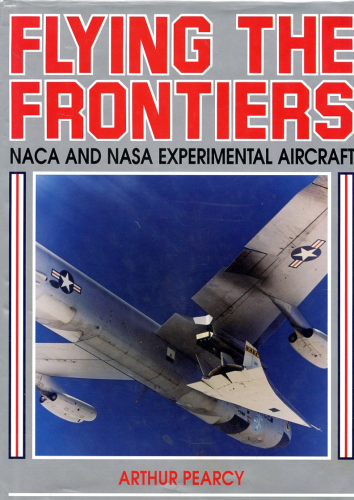
Flying the Frontiers
NACA and NASA Experimental Aircraft
Pearcy, Arthur
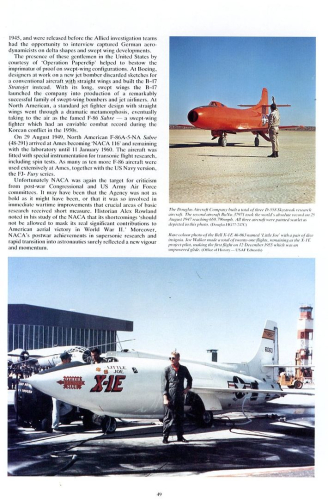
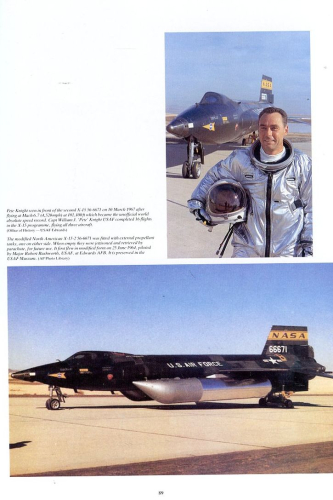
First Edition When WWI broke out in 1914, it was reported that France had 1,400 aircraft, Germany 1,000, Great Britain 400 and the United States 23. By establishing the National Advisory Committee for Aeronautics (NACA) in 1915, the U.S. government took action to alter the nation's backward position in aeronautical research and established a unique agency which would become one of the most important research centres in the world. NACA went on to pioneer high-performance aircraft research and design; the first of its rocket research aircraft, the Bell XS-1, making its first powered flight in 1946. Less than a year later Air Force Captain 'Chuck' Yeager flew it through the sound barrier and pioneered the way into the age of supersonic flight. NACA was involved in a huge range of projects, from the first tentative steps towards VTOL aircraft to the new performance standards set by the 'Century' series aircraft. The launch of the first Russian satellites Sputnik I and II signalled the demise of NACA and the birth of NASA and triggered the Space Race. The agency continued to pioneer research however, conducting tests with the Mach 3 high-altitude research aircraft the YF-12 and later taking delivery of three ex-USAF Lockheed SR-71 Blackbird reconnaissance aircraft for use in an ongoing high-speed research programme. Most recently, research into hypersonic trans-atmospheric aircraft design at NASA has resulted in the first lest flight of the X-30 being scheduled for the future. This is the most ambitious X-aircraft to date; the eventual target is a hydrogen-fuelled aircraft capable of reaching Mach 25, of operating in a low earth orbit and of cruising at Mach 12 within the earth's atmosphere - capable of travelling from the United States to Asia in three hours!
Hardcover with dust jacket, large format
200 Seiten / pages
many photos
very good condition, dustjacket a little rubbed
Shrewsbury, England - 1993 - Airlife Publishing
Art.Nr. 25668